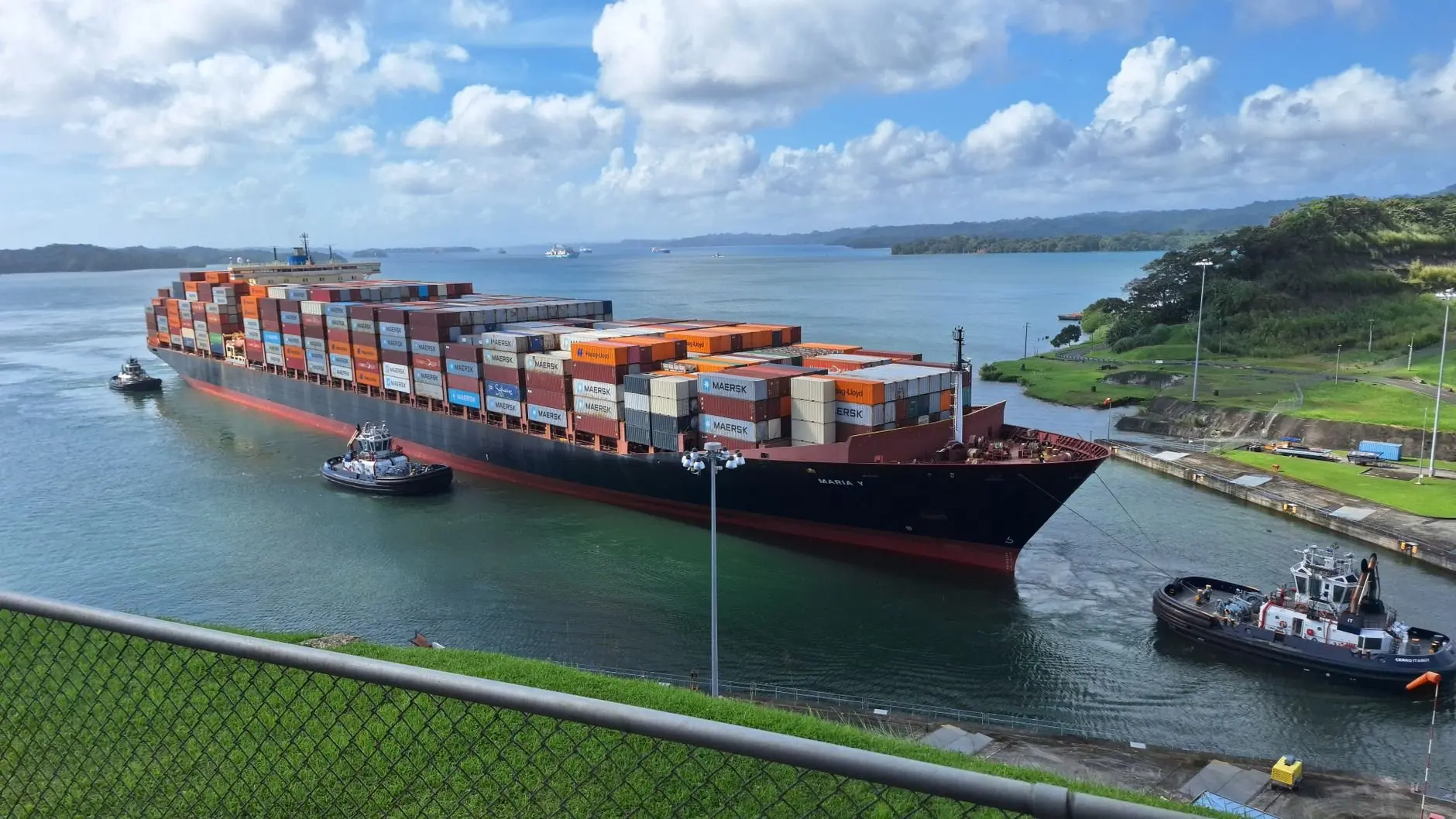
The Panama Canal expansion was inaugurated in 2016. Its third set of locks admits Neopanamax ships up to 366 m long, 49 m wide and 12,600 TEU, against 294 m by 32 m for Panamax.
For the wider canal system, see the panama logistics hub. For the basics of lockage and Gatun Lake, read how does the panama canal work. This article stays on what the project physically built and which ships it let through.
What the expansion built
The expansion added a new set of locks that complements the existing ones and allows larger ships to transit, according to Webuild, a member of the contractor group. It did not replace the original canal. The original canal opened in 1914 and kept operating beside the new works.
Two triple-step lock complexes
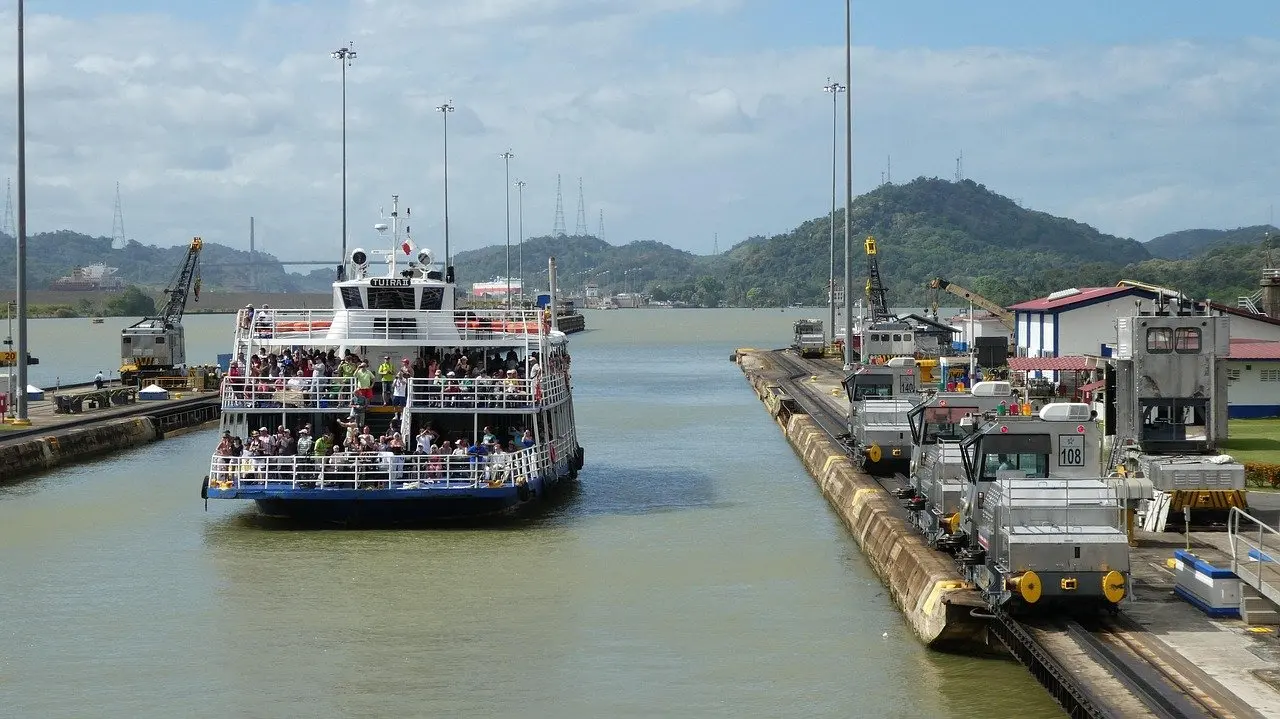
The third set consists of two triple-step locks, one on the Atlantic side and one on the Pacific side. Each lock has three chambers. Together they overcome a level difference of approximately 27 m between the oceans and Gatun Lake. The contract was assigned to an international consortium, Grupo Unidos por el Canal (GUPC).
Why a third set was needed
The original lock chambers set the ceiling on ship size, and that ceiling is the Panamax class. Building wider, longer chambers was the way to raise it. The new locks were designed for the larger ships that the older chambers could not take, so the canal could serve vessels that were outgrowing it.
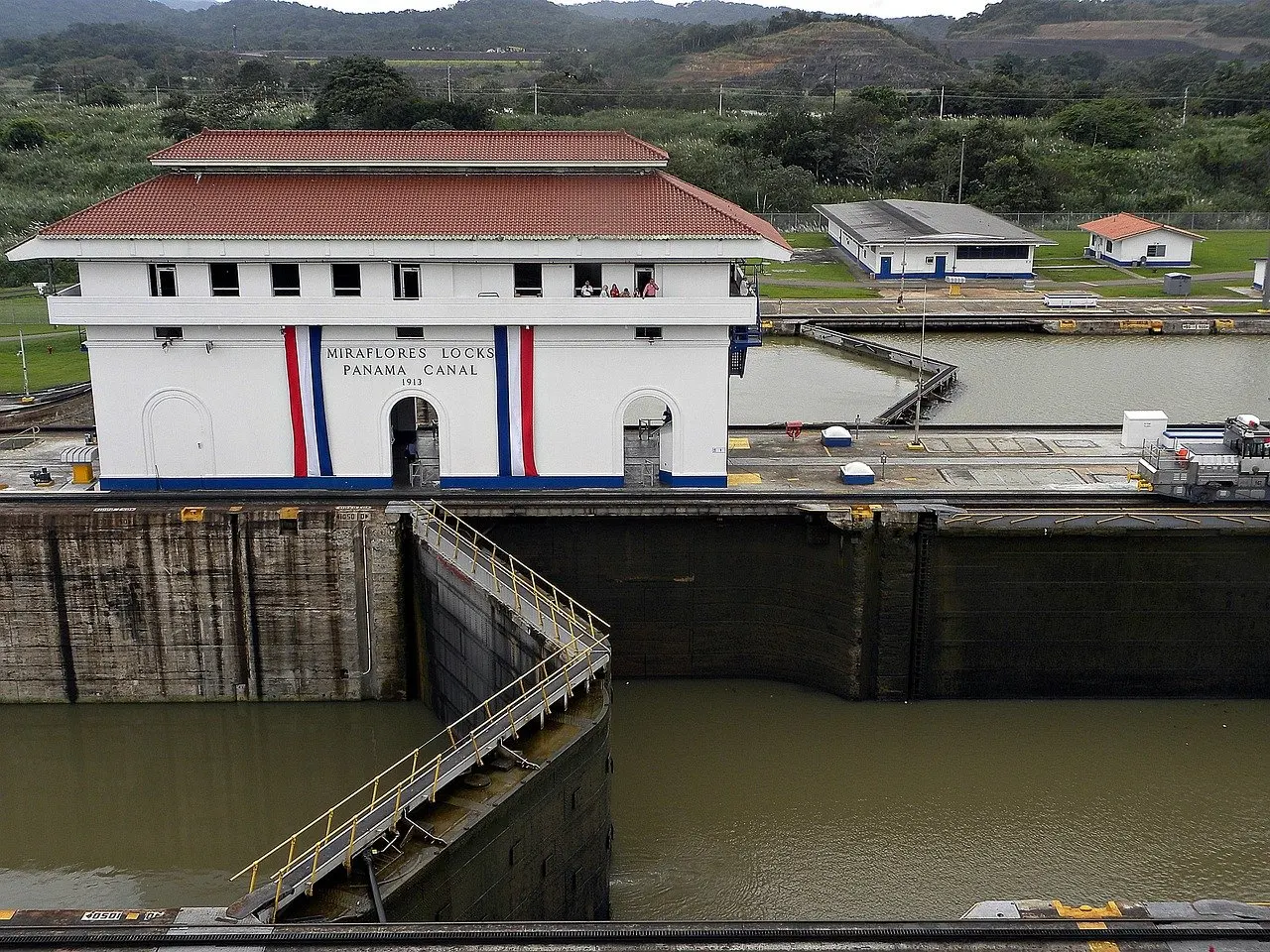
Neopanamax lock chambers and gates
Each Neopanamax chamber is 55 m wide and 427 m long, with a depth of 23 to 33 m, according to the contractor group’s project description. The 427 m length leaves room around a 366 m vessel, and the 55 m width leaves room around a 49 m beam. The clearance is real but modest, which is why the vessel limits sit just inside the chamber sizes.
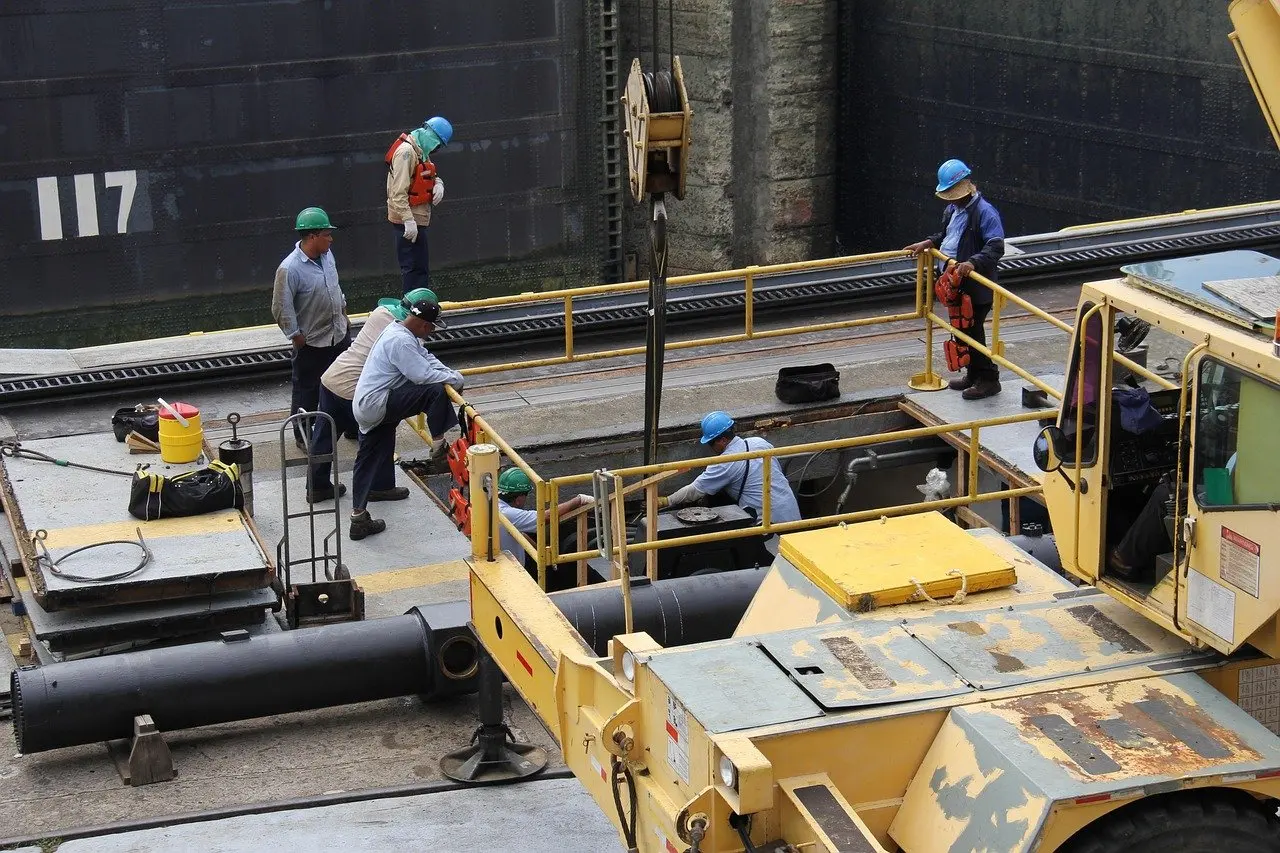
The gates are as notable as the chambers. They stand 23 to 33 m tall, are approximately 10 m wide and approximately 58 m long, and each weighs approximately 4,000 tons. Even so, the gates take approximately 3 to 4 minutes to open or close. A lockage that raises or lowers a ship takes less than two hours.
The comparison between old and new chamber dimensions is best made through the ships. The earlier class is defined by the vessel limits in the next section, and the new chambers are sized for the larger class.
Panamax vs Neopanamax: vessel size side by side
Panamax is the class of ship sized to fit the original locks. Neopanamax is the larger class that fits the third set. The table sets the maximum dimensions next to each other.
| Attribute | Panamax (original locks) | Neopanamax (third set) | Planning use |
|---|---|---|---|
| Maximum width | 32 m | 49 m | Beam is the clearest dividing line between the two classes. |
| Draught | 12 m | Not stated in the project description | Check draught with the canal authority before fixing a deep-laden itinerary. |
| Container capacity | One third of the larger class’s capacity | Up to 12,600 TEU | Treat 12,600 TEU as the ceiling, not the typical call size. |
Figures are from the Webuild project description, which labels the larger ships Post Panamax.
A hull that is 49 m wide cannot enter a 32 m limit, whatever its length. Shippers should therefore ask which locks a given vessel will use before assuming a canal routing.
Water-saving basins
The new locks recover and partly reuse Gatun Lake water through auxiliary basins. According to the project description, this gives a 60% water saving per transit. A transit that would require approximately 500 million litres uses about 200 million litres with the basins.
This matters for design, not only for conservation. The larger chambers hold far more water than the original ones, and without reuse each lockage would draw heavily on the lake. The basins let the bigger chambers operate without a matching rise in demand on Gatun Lake.
Scale and timeline of the works
The project involved 74 million m³ of excavation and 5 million m³ of concrete. Work began seven years before the 2016 inauguration, per the contractor group. An advisory-group report quoting Panama Canal Authority deputy administrator Manuelo Eduardo Benitez put the expansion at 93% complete shortly before it opened.
What changed for shipping
The main change was access for larger container ships. A Panama Advisory International Group report on the Canal Authority’s expectations said the authority was initially expecting ships of 9,000 to 10,000 TEU in US East Coast trade. Before the expansion, Asia to US services ran 16 weekly sailings averaging 4,600 TEU per ship. The same report expected average ship size to increase by some 40%.
Adoption was expected to be gradual. A carrier view in that report held that it would not be a big bang with an armada of 15,000 TEU ships arriving at United States ports. Shippers should plan for step-by-step service changes rather than an overnight switch. The report also noted that in 2014 only 1.5% of the world fleet was above the future canal capacity, so the new locks were aimed at the largest ships.
The new locks are described as allowing the transit of larger ships generally, and the TEU figures above apply to container vessels. Cost implications for these larger transits are covered in the guide to panama canal tolls.
Frequently asked questions
When did the expanded canal open?
The new canal was inaugurated in 2016, after about seven years of construction, per the contractor group.
What does the third set of locks add to the canal?
It adds two triple-step lock complexes, one on the Atlantic side and one on the Pacific side. They sit beside the original locks and handle ships too large for the old chambers.
How much longer and wider can Neopanamax ships be?
Neopanamax ships can reach 366 m in length and 49 m in width, compared with 294 m and 32 m for Panamax, according to the project description.
How much water do the new locks save?
The auxiliary basins give a 60% saving per transit, cutting use from about 500 million litres to about 200 million litres, per the same source.