| Feature | What it involves | Planning use |
|---|---|---|
| Route length | Approximately 80 km from the Atlantic to the Pacific, through locks, navigation channels and Gatún Lake | Treat a transit as a staged passage, not one continuous cut. |
| Lake level | The original locks raise vessels approximately 26 m above sea level to the lake | The lift is the reason every transit depends on lock water. |
| Atlantic side | Gatún Locks, a three-step flight | Expect the first and last lock stage to be a multi-step flight. |
| Chamber size | Original chambers about 305 m by 33.5 m; expanded chambers 427 m by 55 m | Compare vessel dimensions with the chamber type that applies. |
| Water efficiency | Expanded locks reuse up to 60 percent of the water used in a lockage | Water reuse is built into the larger lane, not the original one. |
These figures come from iGoPanama’s explainer on the canal’s locks and lakes, which draws on Autoridad del Canal de Panamá material, and from a construction history of the canal.
How does the Panama Canal work? It lifts ships about 26 m up to Gatún Lake through locks, carries them across the lake and the Gaillard Cut, then lowers them to the other ocean, with gravity-fed lake water doing the lifting.
Wider context on ports, corridors and trade routes sits in the panama logistics hub. This guide follows a single transit from the Atlantic to the Pacific and ties each stage to the water behind it.
What the design means in practice
The canal is a staged passage, and that shapes how anyone should think about a crossing. Ships do not travel at sea level; they climb to a lake, cross land and descend again.
- Lifting is the core task. According to iGoPanama’s summary of the authority’s material, the original locks raise vessels roughly 26 m to the lake. Every other feature of the route exists to support that climb and the matching descent.
- Chamber size sets the physical envelope. The original chambers measure about 305 m by 33.5 m, while an official authority document gives 427 m by 55 m for the expanded chambers. A vessel’s dimensions therefore decide which set of locks is relevant to it.
- Water is a working input, not a backdrop. Each lockage moves lake water. The expanded locks are designed to reuse up to 60 percent of the water used in a lockage, which matters because the lake feeds the whole system.
- The inland stretch is not open sea. The route between the lock flights runs across a lake and then through a dug channel over the continental divide, so the middle of the passage has a different character from the lock approaches.
Shippers deciding between canal routings and other corridors can start with panama canal vs suez canal. The sections below explain the mechanism behind each point above.
A transit from the Atlantic to the Pacific
A west-bound crossing from the Atlantic meets the canal’s features in a fixed order: a three-step lift, a lake, a cut through the divide, then a descent in two stages. Going the other way simply reverses the sequence.
Gatún Locks: the Atlantic lift
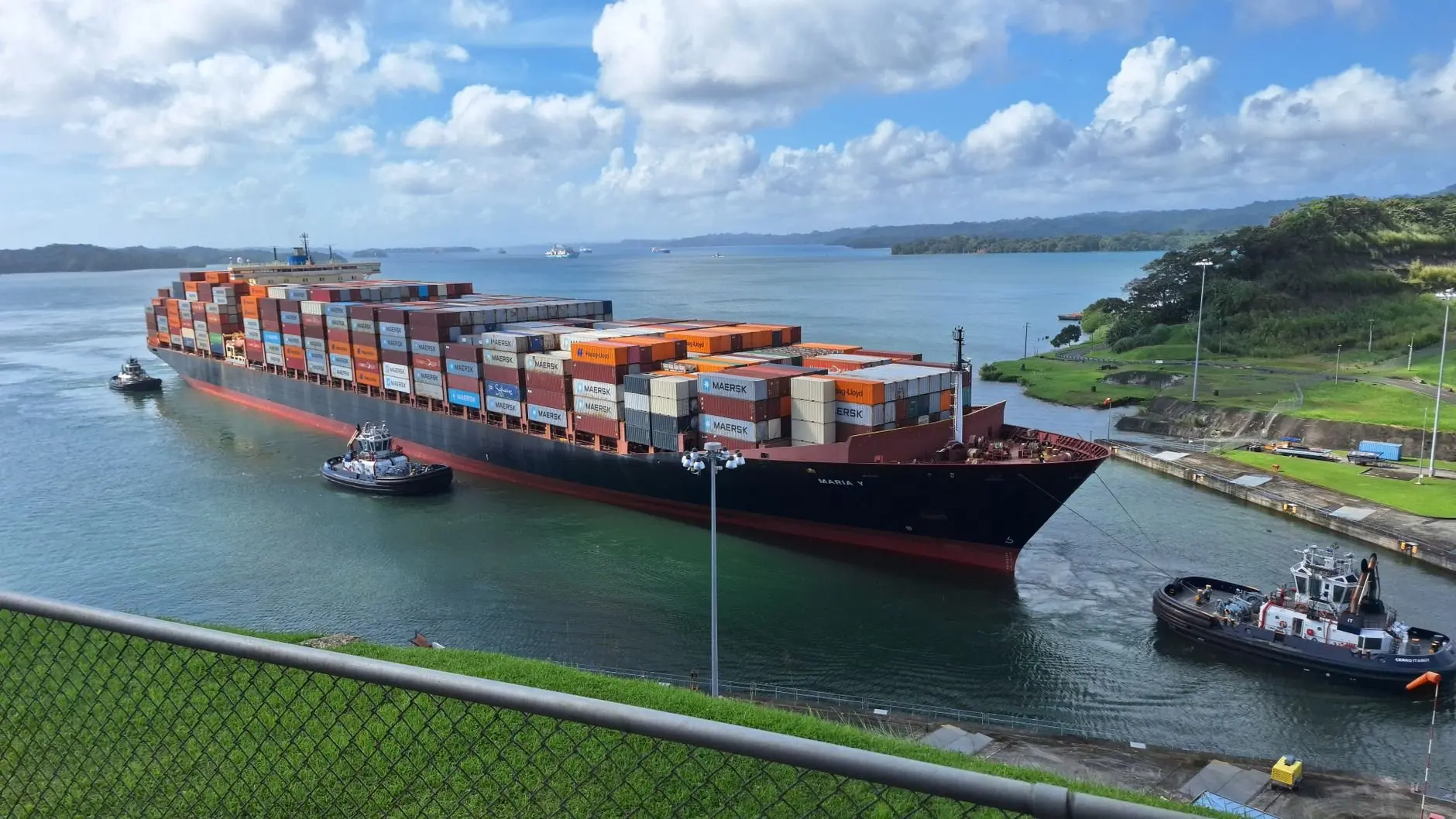
Gatún Locks form the Atlantic-side steps, and the construction history describes them as a three-step lock.
Gatún Lake: the long middle stretch
Once through the top chamber, the ship sails on Gatún Lake rather than in a dug channel. The construction history calls the lake a navigational channel and says it helped quite a bit with the building work, because flooding the valley meant far less had to be excavated. The lake is also the reservoir that supplies the locks, which the water section below explains.
Gaillard Cut: over the divide
Past the lake, a ship must cross the continental divide, and the route that does so is the Gaillard Cut. This is the one narrow, excavated section of the passage, where the channel runs between cut hillsides instead of open water.
Pedro Miguel and Miraflores: down to the Pacific
Miraflores Locks then finish the descent as a two-step lock, which the same account describes as taking a ship between sea level and about 55 feet. The iGoPanama summary puts it in the same terms: Pedro Miguel and Miraflores divide the Pacific-side climb or descent between them.
Where the lock water comes from
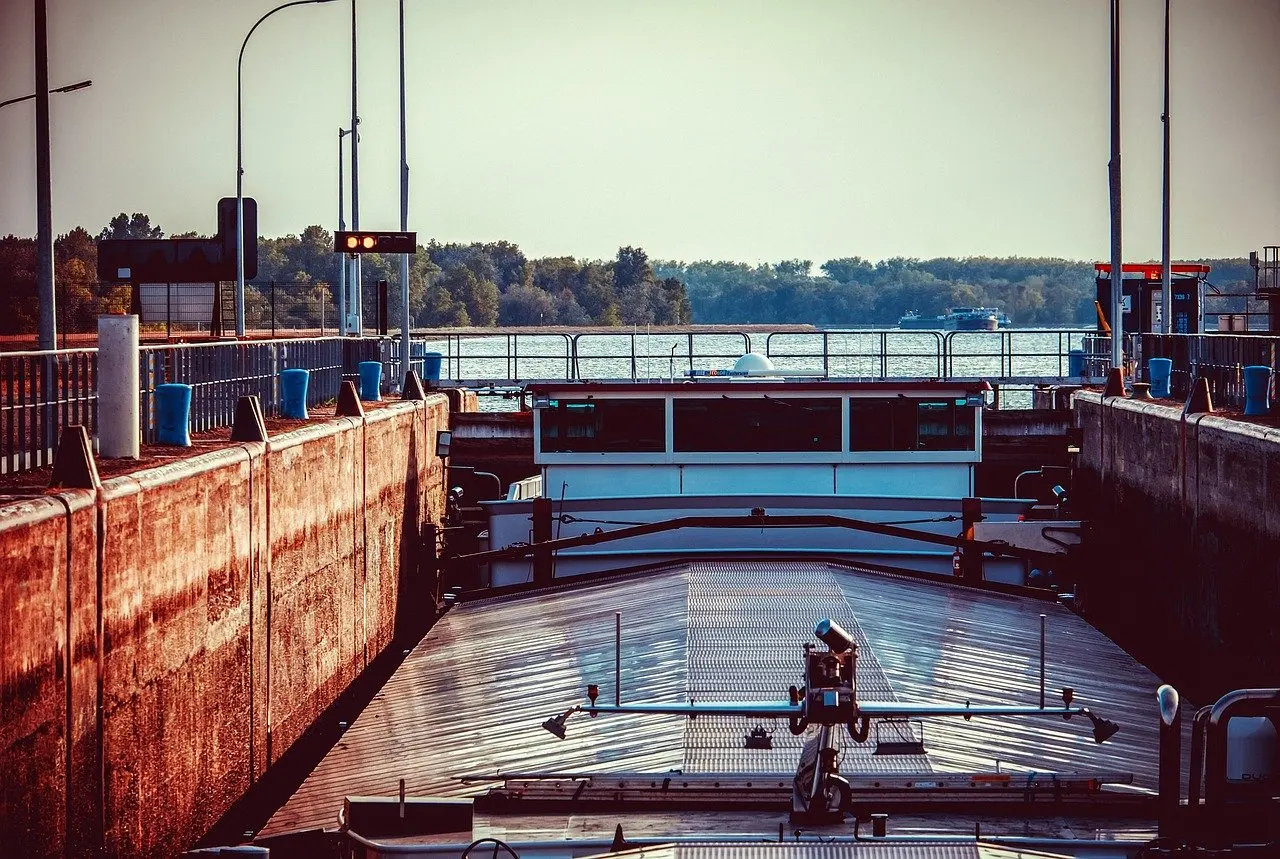
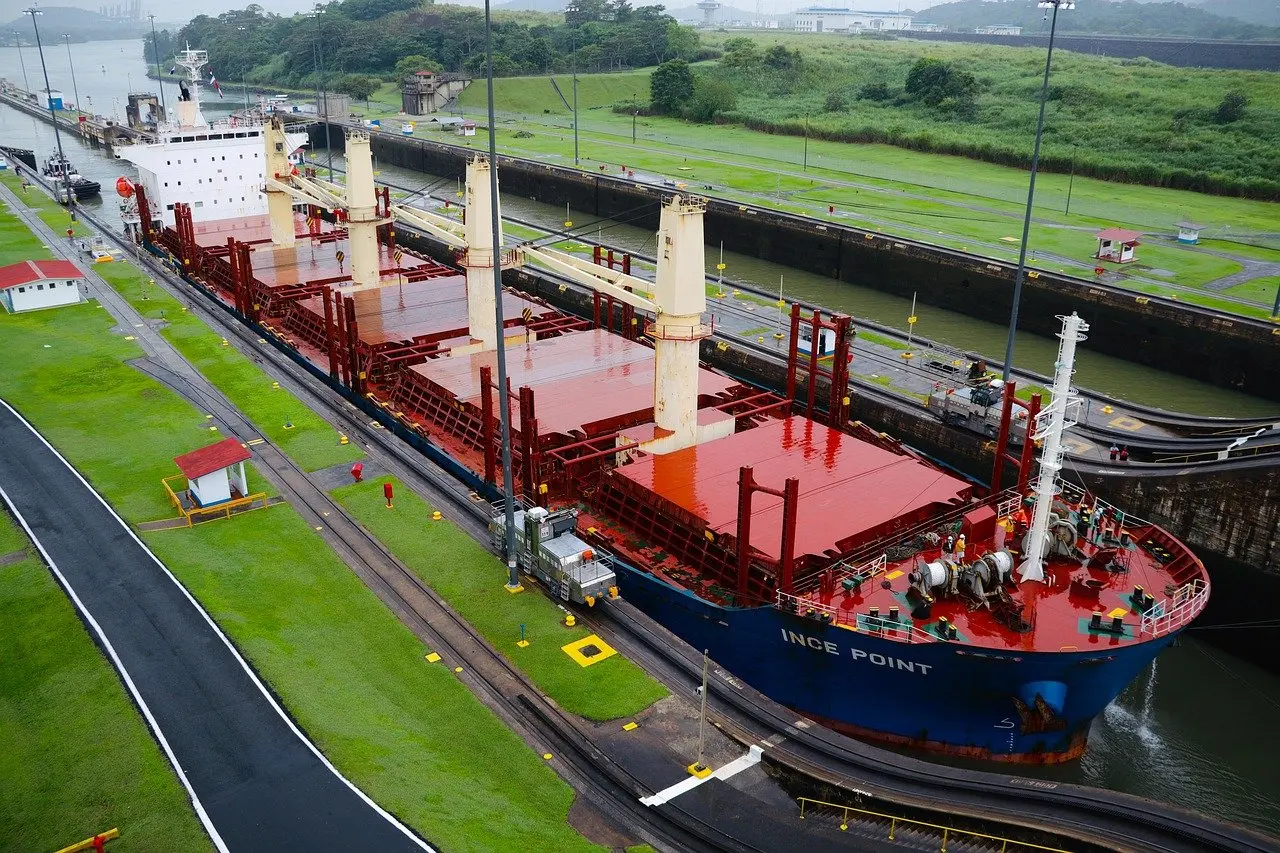
Gatún Lake supplies the water that works the locks, and gravity moves it. According to the iGoPanama explainer, gravity supplies the flow that fills and empties the original locks, and pumps do not lift the water for this process. Because the lake stands above sea level, water can run downhill from it into the chambers.
That arrangement explains why the lake matters so much. A lockage is, in effect, a controlled movement of lake water between chambers, so the supply behind the locks decides how much lifting the system can do.
The larger lane adds a conservation step. Each expanded chamber has three basins, eighteen in total, and the design reuses up to 60 percent of the water used in a lockage. Reuse eases the draw on the lake without changing the gravity principle.
Why a lake instead of a sea-level cut
The canal uses a lake because a fully sea-level cut was the harder route. The construction history notes that the French started with the idea of building a sea-level canal. The terrain through the divide made that difficult: the Gaillard Cut passes through Cucaracha Shale, which absorbs water and caused landslides during excavation.
Raising ships to a lake solved two problems at once. It reduced how much material had to be dug, and it gave ships a ready-made navigational channel across the middle of the route. The trade-off is the dependence on locks and lake water described above.
How many locks, and what the expanded lane adds
The original route has three lock sites. Gatún Locks are a three-step flight on the Atlantic side, Pedro Miguel Locks make a single lift, and Miraflores Locks are a two-step flight on the Pacific side. Counting steps instead of sites gives the clearest picture of how much lifting a ship undergoes.
The expanded locks do not replace those flights. Agua Clara on the Atlantic side and Cocolí on the Pacific side were added as a third lane, built with the larger chamber dimensions and the water-saving basins noted earlier. The engineering behind that lane is covered in panama canal expansion.
Frequently asked questions
What kind of gates do the original locks use?
The original locks use paired miter gates, according to the authority’s design history as summarised by iGoPanama.
Does Gatún Lake serve any purpose besides the locks?
Yes. The authority also identifies the lake’s water as important for drinking-water supply.
Is the Gaillard Cut known by another name?
Yes. It is also called the Culebra Cut, as the construction history notes.
When did the expanded locks open, and where are they?
The expansion opened in June 2016. It added Agua Clara on the Atlantic side and Cocolí on the Pacific side.